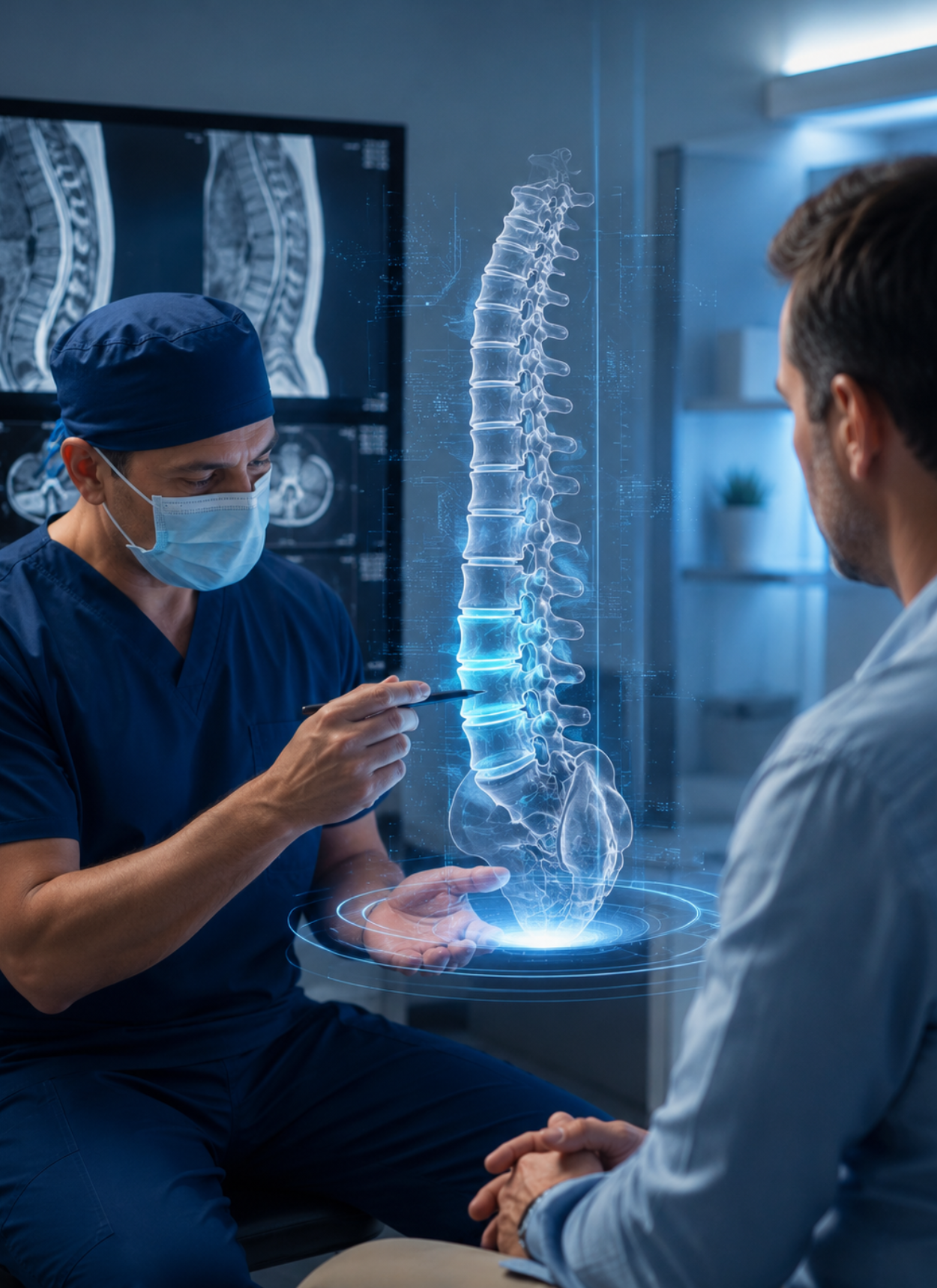

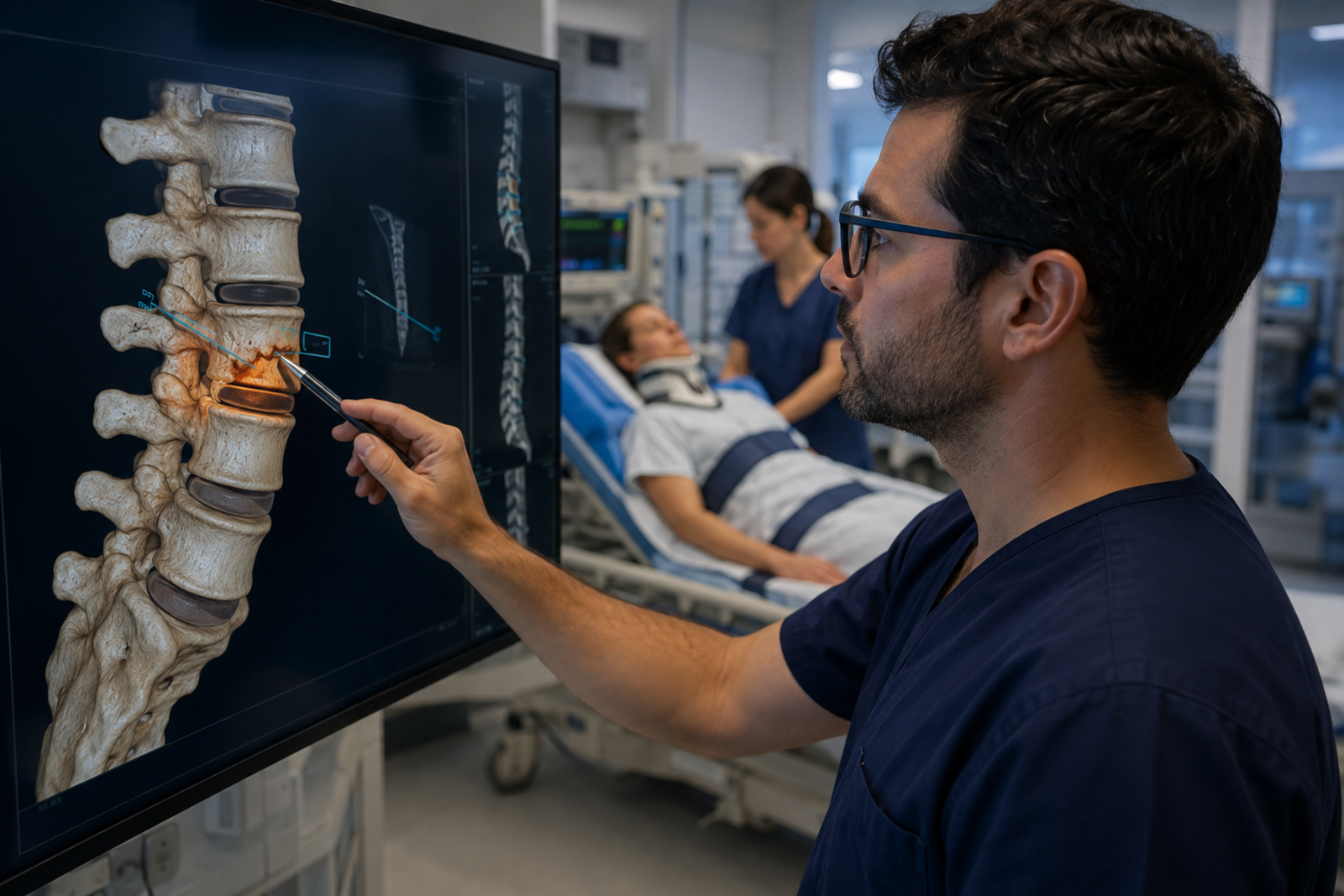
Spinal Trauma & Fracture Care focuses on the evaluation and treatment of spinal injuries caused by accidents, falls, sports injuries, or other traumatic events. Spinal fractures can affect the vertebrae, spinal canal, nerves, or surrounding tissues and may sometimes lead to instability or neurological complications. Treatment depends on the location and severity of the injury and may include immobilization, pain management, bracing, close monitoring, or surgery when necessary. Advanced imaging such as X-rays, CT scans, and MRI may be used to assess the injury accurately. Timely specialist evaluation is essential to stabilize the spine, protect neurological function, manage pain, and support safe recovery.
Spinal Trauma & Fracture Care
Spinal Trauma & Fracture Care is a specialized area of spine treatment focused on the diagnosis, stabilization, and management of injuries affecting the spinal column. Spinal trauma can occur because of road traffic accidents, falls, sports injuries, workplace accidents, or other high-impact events. Depending on the force and mechanism of injury, trauma can affect the vertebrae, intervertebral discs, ligaments, spinal cord, or nerves.
Spinal fractures vary significantly in their severity. Some fractures may be stable and can be managed without surgery, while others may cause spinal instability or place pressure on the spinal cord and nerves. Early assessment is therefore important after a significant spinal injury.
Common Causes of Spinal Trauma
Spinal injuries can occur in a variety of situations. Common causes include:
- Road traffic accidents
- Falls from a height
- Sports-related injuries
- Workplace accidents
- Direct impact to the back or neck
- Heavy-load or lifting injuries
- Osteoporotic fractures
High-energy trauma can cause complex fractures or dislocations, while weakened bones may fracture even after relatively minor injuries.
Types of Spinal Fractures
Spinal fractures can occur in the cervical, thoracic, lumbar, or sacral regions. Different fracture patterns can affect the stability of the spine in different ways.
Some common types include compression fractures, where a vertebra partially collapses; burst fractures, which can occur after significant force and may involve multiple portions of the vertebra; and fractures associated with spinal dislocation or ligament injury.
The type of fracture, its location, degree of displacement, and involvement of the spinal canal all influence treatment decisions.
Symptoms of Spinal Trauma
Symptoms depend on the location and severity of the injury. Common symptoms may include:
- Sudden or severe back or neck pain
- Swelling or tenderness
- Difficulty moving the spine
- Reduced mobility
- Pain during movement
- Numbness or tingling
- Muscle weakness
- Difficulty walking
In serious cases, spinal trauma can affect the spinal cord or nerves, potentially causing significant neurological symptoms. Any new weakness, loss of sensation, difficulty walking, or changes in bladder or bowel function following a spinal injury requires urgent medical assessment.
Initial Evaluation
Spinal trauma requires careful evaluation to determine whether the spine is stable and whether the spinal cord or nerves have been affected.
The medical team may initially focus on protecting the spine from further movement while assessing the patient's overall condition. A neurological examination can evaluate muscle strength, sensation, reflexes, and other functions.
Imaging studies are essential for understanding the nature of the injury. X-rays may provide an initial assessment of the bones and alignment. CT scans can provide detailed information about spinal fractures and bony structures, while MRI can help evaluate the spinal cord, nerves, discs, ligaments, and other soft tissues.
Non-Surgical Treatment
Not every spinal fracture requires surgery. Stable fractures without significant neurological problems may sometimes be treated conservatively.
Depending on the injury, treatment may include pain management, activity modification, bracing, and close clinical and imaging follow-up. The patient may initially require restrictions on certain activities while the fracture heals.
Physiotherapy and rehabilitation may be introduced at an appropriate stage to restore mobility, strength, balance, and confidence with movement.
The treatment plan is individualized according to the fracture type, spinal stability, symptoms, age, bone health, and overall medical condition.
When Is Surgery Required?
Surgery may be considered when a fracture causes significant spinal instability, severe deformity, persistent compression of the spinal cord or nerves, or neurological problems.
Surgery may also be recommended for certain complex fractures that are unlikely to heal adequately with conservative treatment.
The main objectives of surgery are to stabilize the spine, restore alignment where appropriate, relieve pressure on the spinal cord or nerves, and create conditions that support healing.
Surgical Treatment Options
The surgical approach depends on the location and severity of the injury. Procedures may include spinal decompression, fracture reduction, instrumentation, spinal fusion, or a combination of techniques.
Spinal Decompression may be performed when bone fragments or other structures are putting pressure on the spinal cord or nerves.
Spinal Stabilization may involve screws, rods, plates, or other specialized implants to support unstable spinal segments.
Spinal Fusion may be performed in selected cases to help stabilize injured vertebrae and promote long-term spinal stability.
In certain appropriately selected cases, minimally invasive techniques may be used to reduce disruption to surrounding tissues.
Recovery and Rehabilitation
Recovery following spinal trauma varies significantly depending on the severity of the injury and the treatment required. Patients with stable fractures may recover gradually through activity modification, bracing, and rehabilitation.
Patients who undergo surgery may require a structured rehabilitation program. Physiotherapy can help improve mobility, muscle strength, balance, posture, and functional independence.
The recovery period may be longer when the spinal cord or nerves have been affected. Regular follow-up appointments and imaging may be necessary to monitor fracture healing and spinal stability.
Importance of Early Specialist Care
Spinal trauma should be taken seriously because an apparently minor injury can sometimes involve an underlying fracture or instability. Prompt evaluation can help identify injuries early and reduce the risk of complications.
Patients with significant trauma, severe pain, neurological symptoms, or difficulty moving should receive appropriate medical assessment rather than attempting to manage the injury independently.
Conclusion
Spinal Trauma & Fracture Care provides specialized evaluation and treatment for spinal injuries resulting from accidents, falls, sports injuries, and other traumatic events. Treatment ranges from immobilization and conservative management to advanced surgical stabilization and decompression, depending on the severity and stability of the injury.
With timely diagnosis, appropriate treatment, and structured rehabilitation, the goals are to stabilize the spine, protect neurological function, manage pain, support fracture healing, and help patients regain safe mobility and independence.