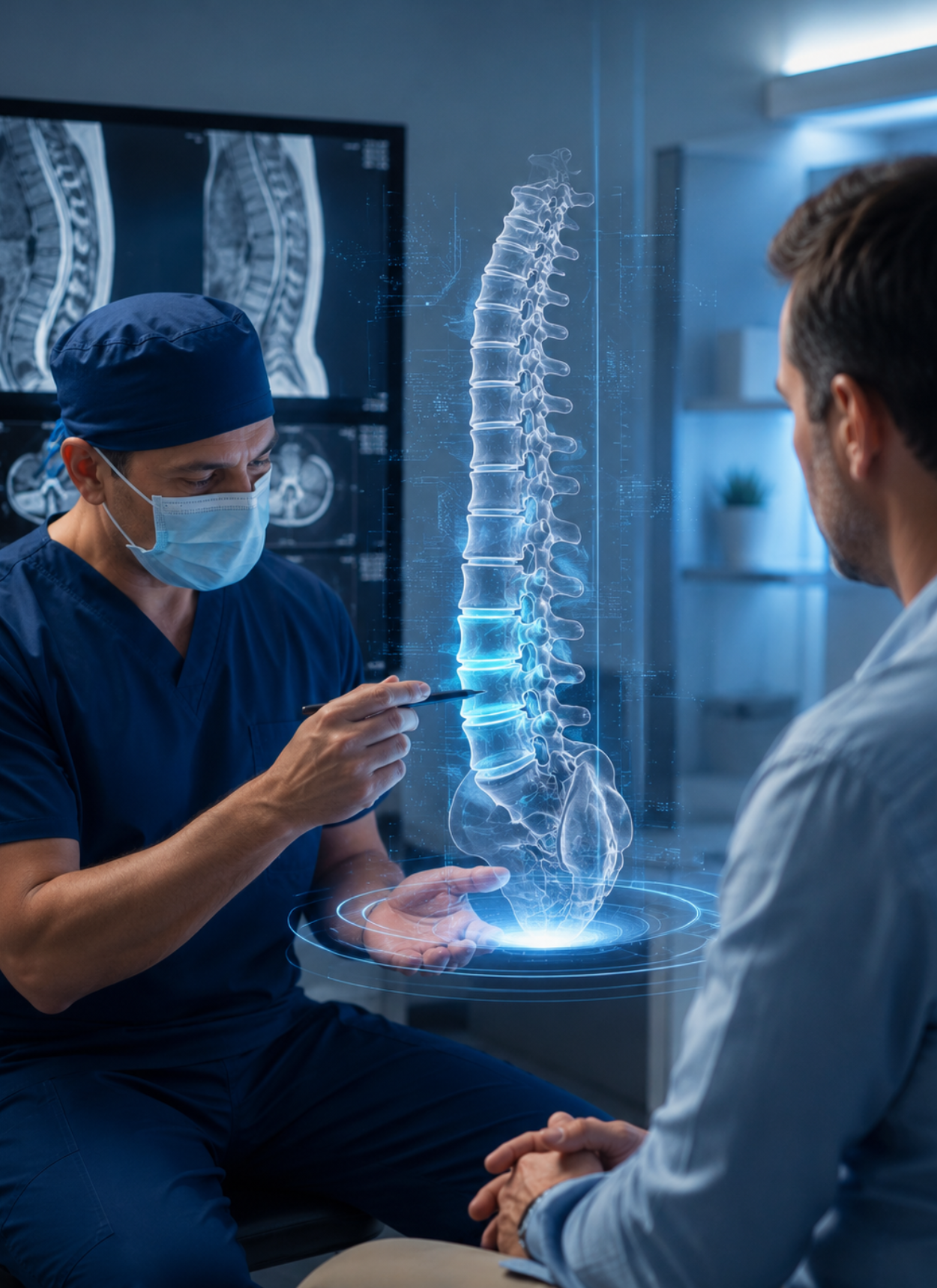

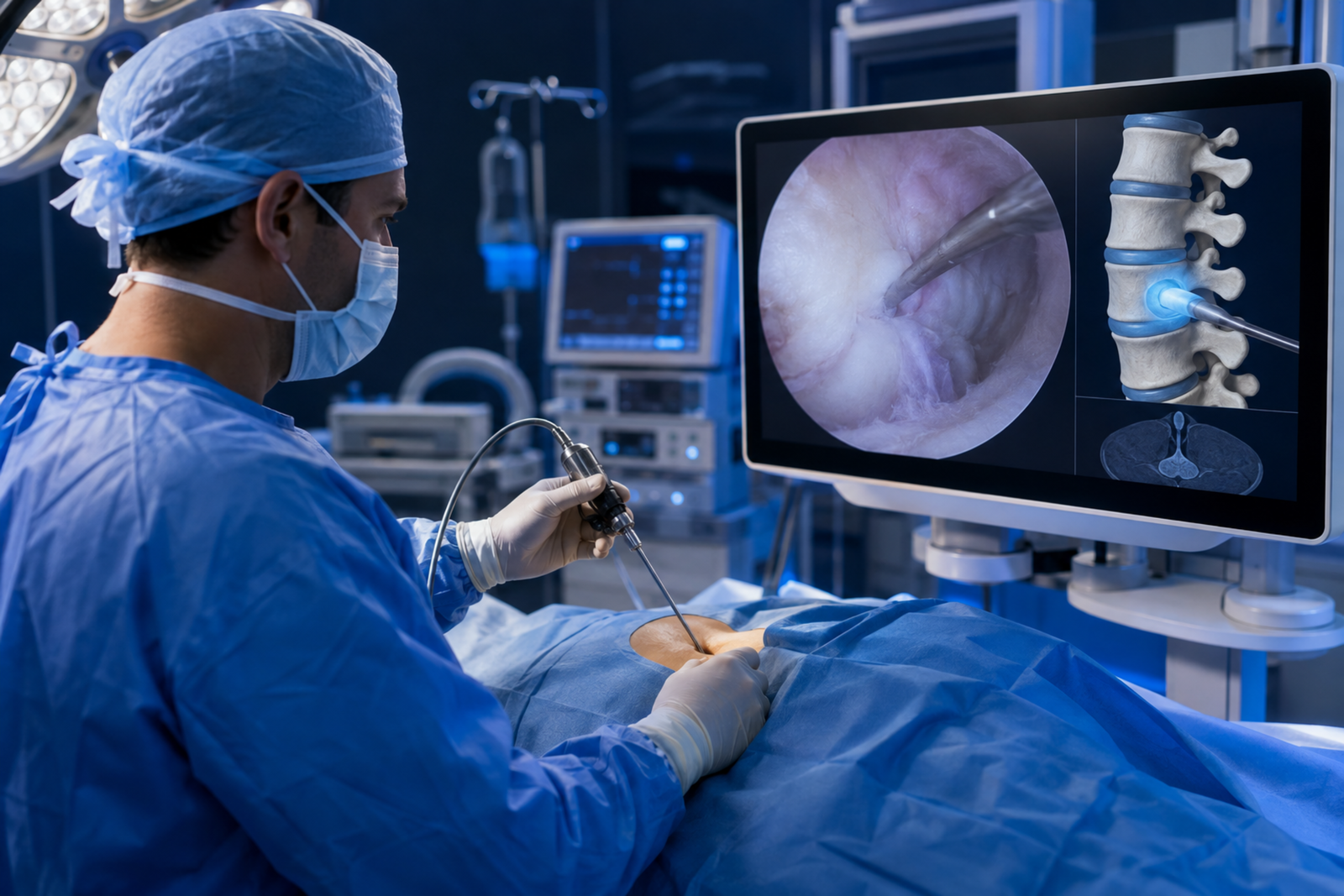
Endoscopic Spine Surgery is a minimally invasive technique used to diagnose and treat selected spinal conditions through a small incision. The procedure uses a specialized endoscope equipped with a camera and light, allowing the spine surgeon to clearly visualize the affected area. It may be used for conditions such as herniated discs, nerve compression, spinal stenosis, and certain degenerative spine disorders. Compared with conventional open surgery, endoscopic techniques may involve less disruption to surrounding muscles and soft tissues. Depending on the patient's condition and procedure, potential benefits may include reduced postoperative discomfort, smaller scars, shorter hospital stays, and faster recovery. Careful evaluation is essential to determine suitability.
Endoscopic Spine Surgery
Endoscopic Spine Surgery is an advanced minimally invasive surgical technique used to treat selected conditions affecting the spine. Unlike traditional open spine surgery, which may require a larger incision and greater exposure of the spinal structures, endoscopic procedures use a small incision through which a specialized endoscope is introduced. The endoscope contains a camera and light source that allow the spine surgeon to view the affected area on a high-resolution monitor.
The technique is designed to provide access to the spinal structures while minimizing disruption to the surrounding muscles, ligaments, and soft tissues. Depending on the patient's diagnosis, endoscopic surgery may be used to remove a portion of a damaged disc, decompress a nerve, or address other specific causes of spinal pain and neurological symptoms.
What Is Endoscopic Spine Surgery?
Endoscopic spine surgery is a form of minimally invasive spine surgery that uses an endoscope to access the targeted area of the spine. The endoscope is a thin surgical instrument that provides magnified visualization of the surgical field.
Through a small incision, the surgeon carefully guides the endoscope toward the affected spinal structure. Specialized instruments can then be introduced through the working channel of the endoscope to perform the required procedure.
The approach can be performed through different anatomical routes depending on the location and nature of the spinal problem. The exact technique is selected after reviewing the patient's symptoms, physical examination, and imaging studies.
Conditions That May Be Treated
Endoscopic spine surgery may be considered for appropriately selected patients with conditions such as:
- Herniated or slipped discs
- Disc-related nerve compression
- Certain cases of spinal stenosis
- Foraminal stenosis
- Selected degenerative spine conditions
- Radicular pain caused by nerve compression
- Some recurrent disc problems
- Certain localized spinal conditions
Not every spinal condition can be treated using an endoscopic approach. The suitability of the procedure depends on factors such as the location and severity of the condition, spinal anatomy, previous surgeries, neurological findings, and overall health.
How Does Endoscopic Spine Surgery Work?
Before the procedure, the patient undergoes a detailed clinical evaluation. Imaging investigations such as MRI, CT scans, or X-rays may be used to identify the source of symptoms and determine the exact spinal level requiring treatment.
During the procedure, the surgeon makes a small incision through which the endoscope is inserted. The camera provides a magnified view of the affected area on a monitor. This visualization helps the surgeon identify important anatomical structures and the source of nerve compression or other pathology.
Specialized instruments are then introduced through the endoscope. Depending on the condition, the surgeon may remove herniated disc material, decompress a nerve, or remove other tissue contributing to the patient's symptoms.
Once the necessary treatment is completed, the endoscope and instruments are removed, and the small incision is closed according to the surgical requirements.
Potential Benefits
One of the key objectives of endoscopic spine surgery is to provide effective treatment while limiting damage to normal surrounding tissues.
Depending on the procedure and individual patient factors, potential benefits may include a smaller incision, reduced muscle disruption, less blood loss, and reduced postoperative discomfort. Some patients may also experience a shorter hospital stay and earlier mobilization compared with certain conventional surgical approaches.
Endoscopic procedures may also result in a smaller surgical scar. However, outcomes vary from patient to patient, and endoscopic surgery is not necessarily suitable or superior for every spinal condition.
The most important consideration is selecting the appropriate procedure for the patient's specific diagnosis rather than choosing a technique based only on its minimally invasive nature.
Recovery After Endoscopic Spine Surgery
Recovery depends on the type of endoscopic procedure performed and the patient's overall health. Many patients are encouraged to begin gentle movement relatively soon after surgery, depending on their individual circumstances.
The surgeon may provide specific instructions regarding walking, physical activity, lifting, bending, driving, and returning to work. Physiotherapy may be recommended when appropriate to improve strength, flexibility, posture, and functional recovery.
Patients should follow all postoperative instructions and attend follow-up appointments. Recovery timelines can vary significantly, and patients should not return to strenuous activities until cleared by their treating surgeon.
Who May Be Suitable?
Endoscopic spine surgery is generally considered for patients whose symptoms are caused by a spinal condition that can be safely and effectively addressed through an endoscopic approach.
A detailed assessment is essential before recommending the procedure. The spine surgeon considers the patient's symptoms, neurological examination, MRI or other imaging findings, previous treatments, medical history, and treatment goals.
In some cases, traditional open surgery or another treatment approach may be more appropriate. Therefore, the decision should always be individualized.
Why Specialist Evaluation Matters
Accurate diagnosis is one of the most important steps in spine treatment. Back or neck pain can have several different causes, and surgery may not be necessary in every case.
An experienced spine specialist can determine whether the symptoms are related to a disc problem, nerve compression, spinal narrowing, instability, deformity, or another condition. Based on the evaluation, the specialist can explain non-surgical and surgical options and discuss the expected benefits and potential risks.
Conclusion
Endoscopic Spine Surgery offers a modern minimally invasive option for appropriately selected spinal conditions. By using a specialized camera and instruments through a small incision, the technique aims to reach the affected spinal area while minimizing disruption to surrounding tissues.
When properly indicated and performed by an appropriately trained spine surgeon, endoscopic surgery can be an effective treatment option for certain disc-related and nervecompression conditions. A thorough clinical and radiological evaluation remains essential to determine whether endoscopic spine surgery is the right choice for each patient.