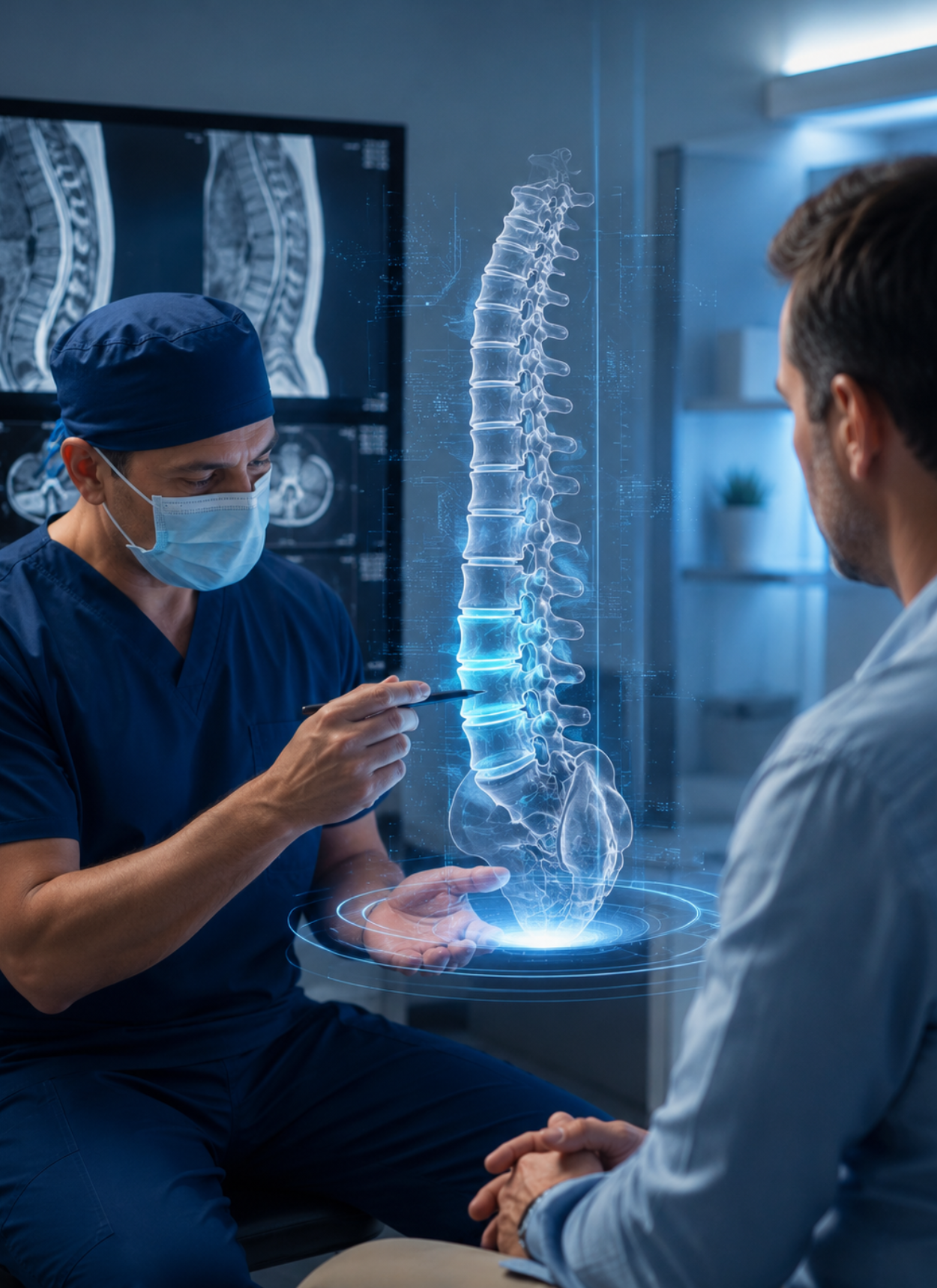

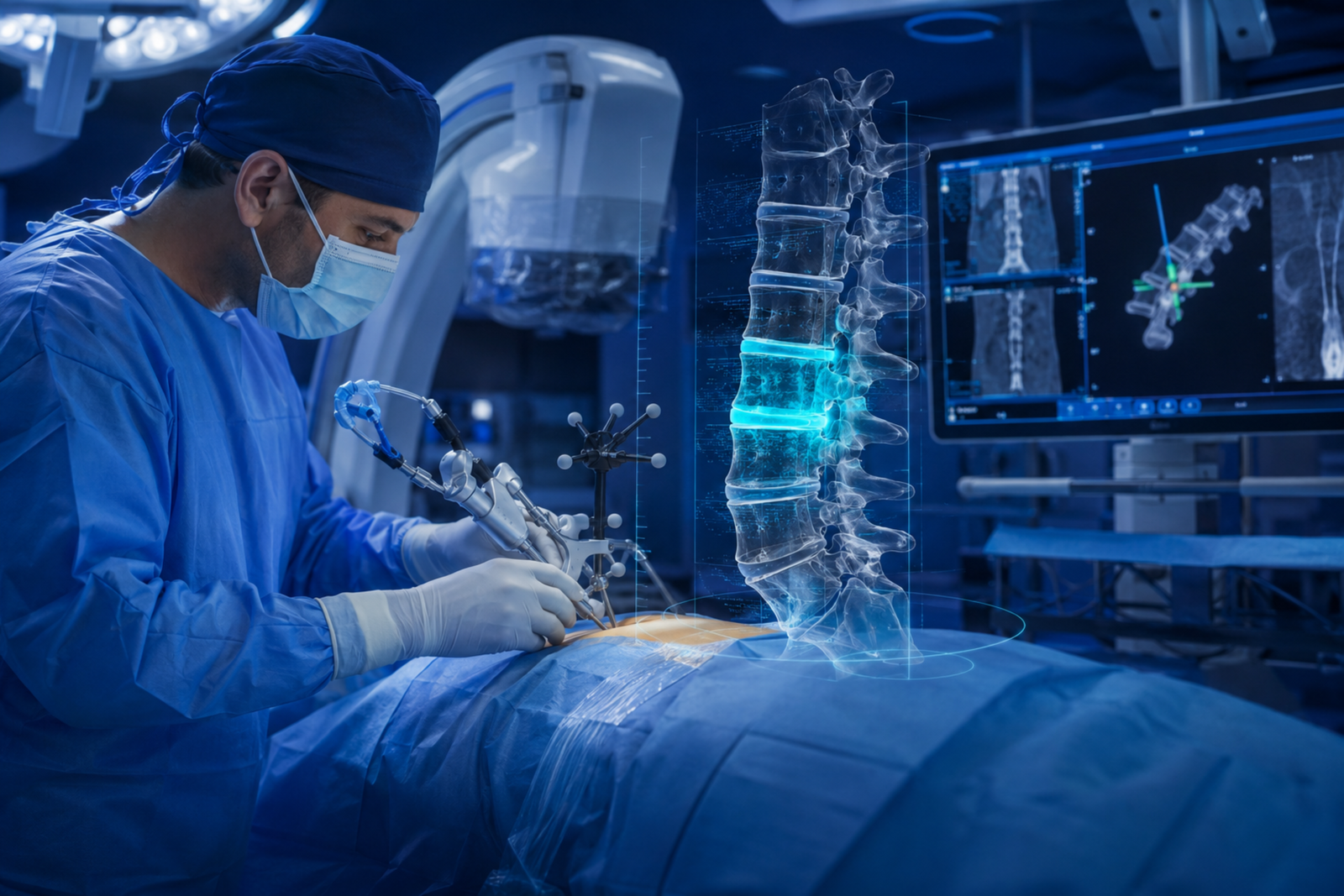
Lumbar Spine Surgery is a specialized treatment for conditions affecting the lower back, including herniated discs, spinal stenosis, nerve compression, degenerative changes, and selected spinal injuries. These conditions may cause lower back pain, sciatica, numbness, tingling, or weakness in the legs. Surgery is considered when symptoms persist despite appropriate non-surgical treatment or when significant nerve compression, neurological problems, or spinal instability is present. Depending on the diagnosis, procedures may include lumbar decompression, discectomy, spinal fusion, or minimally invasive and endoscopic techniques. A detailed clinical examination and appropriate imaging help identify the underlying condition and determine the most suitable treatment approach for each patient.
Lumbar Spine Surgery
Lumbar Spine Surgery is a specialized form of spine surgery used to treat selected conditions affecting the lower back. The lumbar spine consists of five vertebrae located between the thoracic spine and the pelvis. It supports much of the body's weight and plays an important role in standing, walking, bending, and other everyday movements.
Problems in the lumbar spine can affect the discs, vertebrae, joints, nerves, or spinal canal. Conditions such as herniated discs, spinal stenosis, degenerative disc disease, nerve compression, and certain spinal injuries can result in persistent lower back pain or symptoms extending into the buttocks and legs.
Surgery is not necessary for every patient with lumbar spine problems. In many cases, symptoms can improve with non-surgical treatment. Surgery may be considered when symptoms remain significant, neurological problems develop, or a structural spinal problem requires surgical correction.
Common Conditions Treated
Lumbar spine surgery may be considered for conditions such as:
- Lumbar disc herniation
- Sciatica caused by nerve compression
- Lumbar spinal stenosis
- Degenerative disc disease
- Lumbar nerve compression
- Certain cases of spinal instability
- Selected spinal deformities
- Some traumatic spinal injuries
The appropriate treatment depends on the specific diagnosis, severity of symptoms, imaging findings, neurological condition, and overall health of the patient.
Symptoms of Lumbar Spine Problems
Lumbar spine conditions can cause different symptoms depending on the structures involved. Common symptoms include lower back pain, stiffness, difficulty bending, and reduced mobility.
When a spinal nerve is compressed, patients may experience sciatica, where pain travels from the lower back through the buttock and into the leg. Numbness, tingling, burning sensations, or weakness in the leg or foot may also occur.
Some patients with spinal stenosis experience pain, heaviness, numbness, or weakness in the legs after standing or walking for a period of time. Symptoms may sometimes improve when sitting or changing position.
Diagnosis and Evaluation
Accurate diagnosis is an important part of lumbar spine treatment. The spine specialist reviews the patient's symptoms, medical history, previous treatments, and functional limitations.
A physical and neurological examination may evaluate spinal movement, muscle strength, reflexes, sensation, and other neurological functions.
Imaging investigations can include X-rays, MRI scans, or CT scans. MRI is particularly useful for examining discs, nerves, the spinal canal, and other soft tissues. X-rays can help evaluate bone structures, spinal alignment, and movement, while CT scans provide detailed information about the bones.
The results of these investigations are considered together with the patient's clinical symptoms to identify the actual source of pain and determine whether surgery may be beneficial.
Non-Surgical Treatment
Many lumbar spine conditions are initially managed without surgery. Depending on the diagnosis, treatment may include medication, activity modification, physiotherapy, exercisebased rehabilitation, and other conservative approaches.
Physiotherapy can help improve core strength, flexibility, posture, movement patterns, and overall physical function. Patients may also receive guidance regarding daily activities and techniques to reduce unnecessary strain on the lower back.
In selected cases, targeted spinal injections may be considered to help manage pain and inflammation.
If symptoms improve with conservative management and there is no significant neurological deterioration, surgery may not be necessary.
When Is Lumbar Spine Surgery Recommended?
Surgery may be considered when pain or neurological symptoms continue despite appropriate non-surgical treatment. It may also be recommended when there is significant nerve compression, progressive weakness, spinal instability, or another structural condition that can be effectively addressed through surgery.
The decision to operate is individualized. A surgeon considers the patient's symptoms, examination findings, imaging results, medical history, and expected benefits and risks before recommending a procedure.
Types of Lumbar Spine Surgery
Several surgical techniques may be used depending on the underlying condition.
Lumbar Discectomy: This procedure involves removing the portion of a herniated disc that is compressing a spinal nerve. It may be considered for selected patients with persistent nerve-related leg pain.
Lumbar Decompression Surgery: The surgeon removes or modifies structures that are narrowing the spinal canal or nerve passageways, helping create more space for compressed nerves.
Spinal Fusion: In selected cases involving instability or certain degenerative conditions, two or more vertebrae may be stabilized using bone grafts and specialized implants.
Minimally Invasive Lumbar Surgery: Selected conditions can be treated using smaller incisions and specialized instruments designed to reduce disruption to surrounding tissues.
Endoscopic Spine Surgery: In appropriately selected cases, an endoscope and specialized instruments may be used to treat certain disc-related or nerve-compression conditions.
The appropriate technique depends on the patient's specific anatomy and diagnosis.
Potential Benefits
The primary goal of lumbar spine surgery is to address the structural cause of symptoms. Depending on the condition and procedure, surgery may help relieve nerve-related leg pain, reduce compression, improve mobility, and stabilize the spine when necessary.
Minimally invasive approaches may offer potential benefits such as smaller incisions and reduced disruption to surrounding tissues in selected patients.
However, outcomes vary, and surgery does not guarantee complete relief of all symptoms. Patients should discuss expected outcomes and potential risks with their spine specialist.
Recovery and Rehabilitation
Recovery after lumbar spine surgery depends on the procedure performed, the severity of the condition, and the patient's general health. Patients are generally encouraged to begin appropriate movement gradually under medical guidance.
Physiotherapy may be recommended to improve strength, flexibility, posture, and functional mobility. Patients may initially need to avoid heavy lifting, excessive bending, or strenuous activities.
Following postoperative instructions and attending scheduled follow-up appointments are important for monitoring recovery.
Conclusion
Lumbar Spine Surgery provides specialized treatment for selected lower-back conditions involving discs, nerves, spinal structures, and alignment. With accurate diagnosis and appropriate treatment planning, surgical procedures can address nerve compression, spinal instability, and other structural problems.
A comprehensive evaluation by an experienced spine specialist helps determine whether surgery is appropriate and which technique is most suitable. The overall goal is to relieve symptoms, protect neurological function, improve mobility, and help patients return to their normal daily activities.