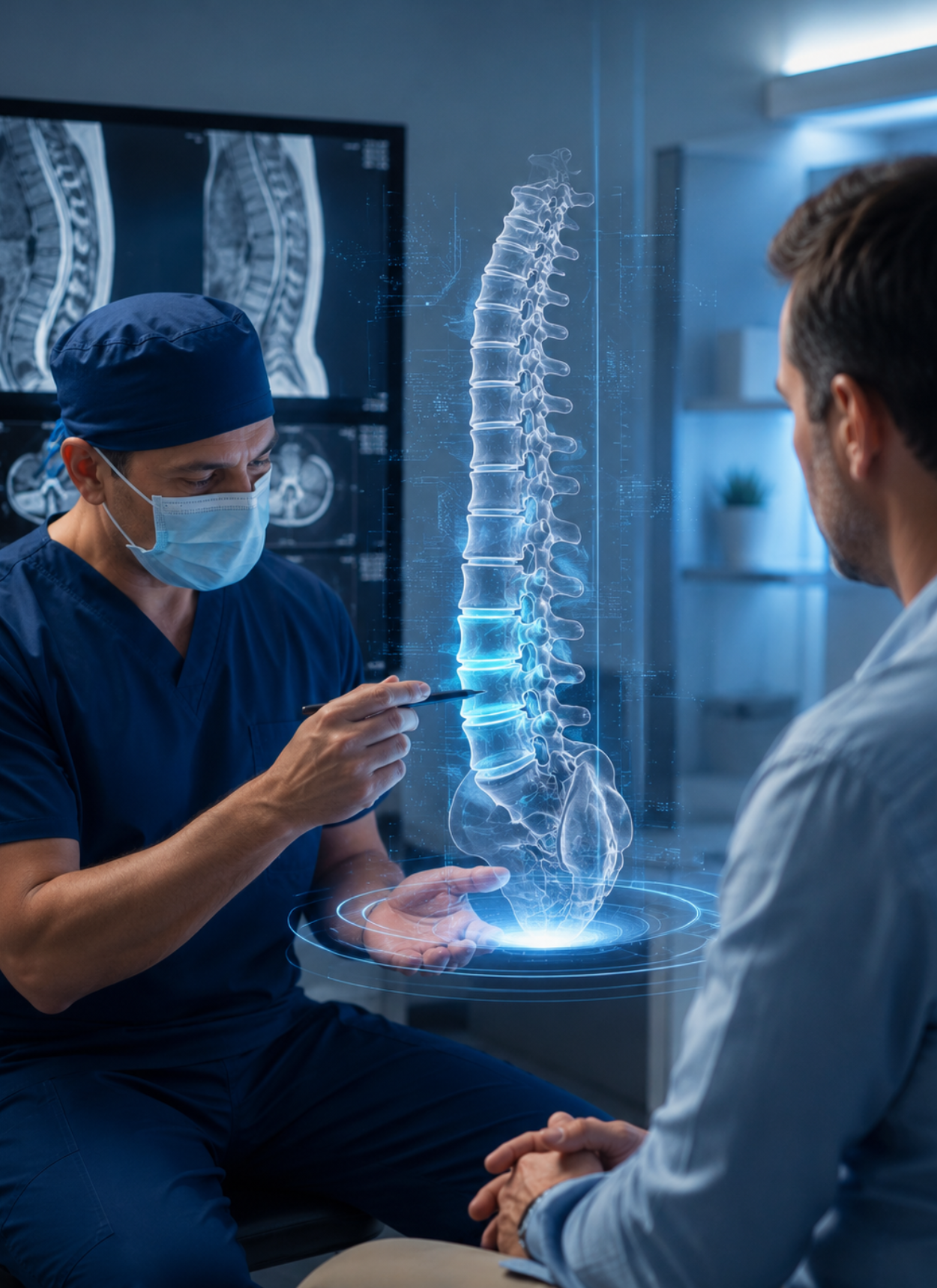

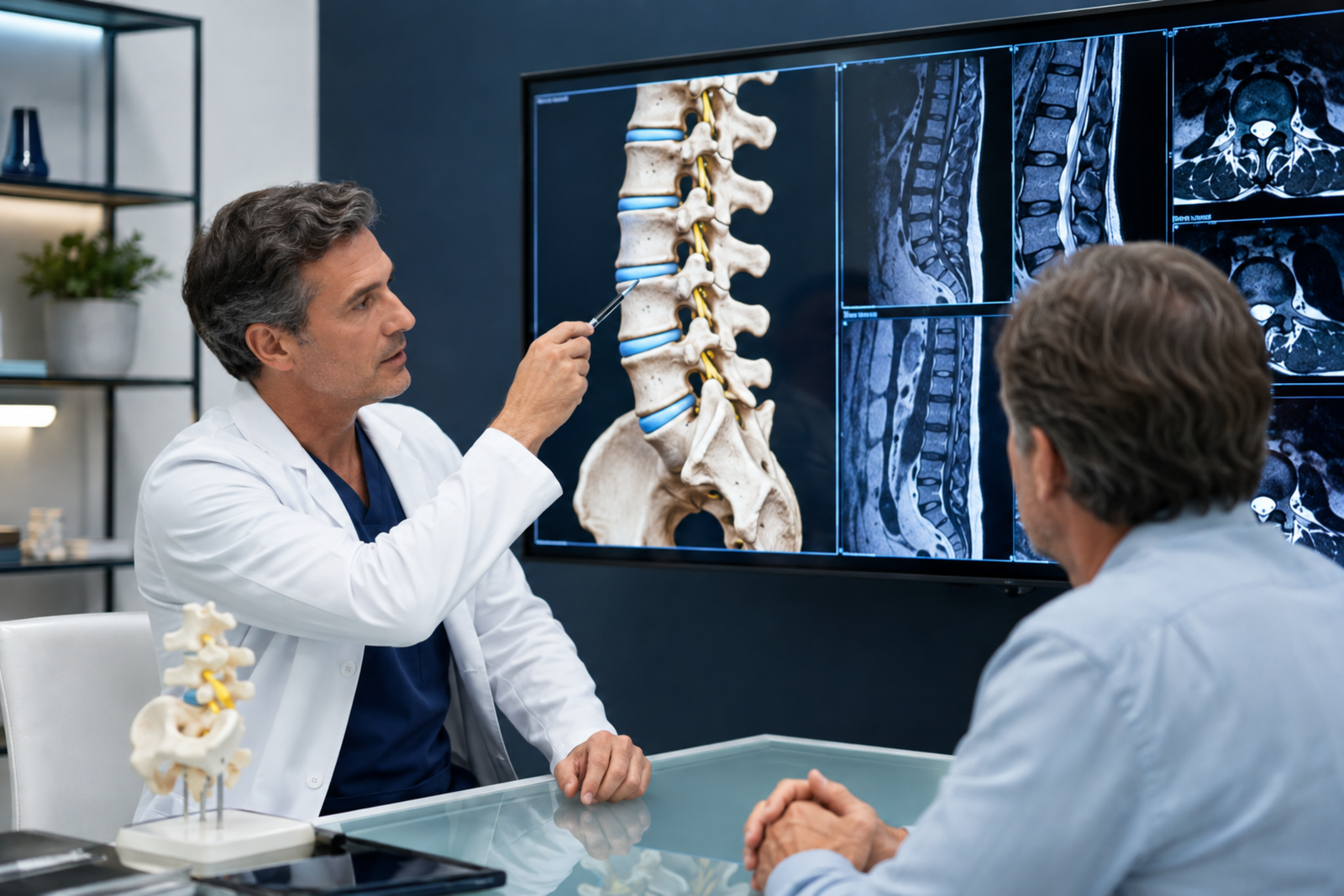
A Second Opinion for Spine Surgery provides an independent expert review of a patient's spinal diagnosis, imaging reports, symptoms, and recommended surgical treatment. It can help patients better understand their condition, confirm whether surgery is appropriate, and explore alternative treatment options when available. A spine specialist may review MRI, CT scans, X-rays, previous medical records, and the proposed surgical plan to provide a comprehensive assessment. The consultation may be particularly helpful when surgery is complex, when symptoms and imaging findings do not clearly match, or when a patient is uncertain about the recommended procedure. The goal is to support informed, confident, and personalized treatment decisions.
Second Opinion for Spine Surgery
Second Opinion for Spine Surgery is a specialized consultation that provides patients with an independent expert assessment of their spinal condition and proposed surgical treatment. Receiving a recommendation for spine surgery can be an important decision, particularly when the procedure is complex, involves multiple spinal levels, or may significantly affect daily life. A second opinion allows patients to review their diagnosis and treatment plan with another experienced spine specialist before proceeding.
The purpose of a second opinion is not necessarily to disagree with the first surgeon. Instead, it provides another professional perspective that can help confirm the diagnosis, assess the necessity of surgery, discuss alternative treatment options, and clarify the expected benefits and potential risks.
Why Consider a Second Opinion?
Patients may seek a second opinion for several reasons. Some may want confirmation that surgery is the appropriate next step, while others may be interested in understanding whether non-surgical options could still be considered.
A second opinion can be especially useful when:
- Spine surgery has been recommended
- The proposed surgery is complex
- Multiple surgical options are available
- Symptoms have persisted despite treatment
- The diagnosis is unclear
- Imaging findings and symptoms do not appear to match
- The patient has concerns about the recommended procedure
- A previous spine surgery has not provided the expected improvement
An independent review can help patients make decisions based on a clearer understanding of their condition.
What Is Reviewed During a Second Opinion?
A spine specialist may review several aspects of the patient's medical information. These can include previous consultation notes, MRI scans, CT scans, X-rays, laboratory reports when relevant, medication history, previous treatment records, and details of any earlier spinal procedures.
The specialist also evaluates the patient's current symptoms and how they affect daily activities. A physical and neurological examination may be performed when appropriate.
The goal is to understand whether the diagnosis, imaging findings, symptoms, and proposed treatment are consistent with one another.
Understanding the Diagnosis
Spinal conditions can have similar symptoms but require very different treatments. Back pain, neck pain, numbness, or leg and arm symptoms may arise from disc problems, nerve compression, spinal stenosis, degeneration, instability, deformity, or other causes.
Imaging findings can also be complex. Degenerative changes may appear on an MRI even in people who do not have significant symptoms. Therefore, a specialist should consider the patient's complete clinical picture rather than relying on imaging alone.
A second opinion can help clarify the likely source of symptoms and whether the proposed surgery directly addresses that problem.
Is Surgery Necessary?
One of the most important questions patients may have is whether surgery is actually necessary.
Depending on the condition, treatment options may include medication, physiotherapy, rehabilitation, activity modification, injections, or observation. Some patients may improve without surgery, while others may have structural or neurological problems for which surgery is a reasonable treatment option.
A second-opinion consultation can help determine whether continued non-surgical management may be appropriate or whether surgical treatment should be considered based on the patient's individual circumstances.
Reviewing the Proposed Surgery
If surgery is recommended, the second-opinion specialist can review the proposed procedure and explain its purpose.
For example, depending on the condition, surgery may involve:
- Discectomy
- Decompression surgery
- Spinal fusion
- Cervical spine surgery
- Lumbar spine surgery
- Minimally invasive spine surgery
- Endoscopic spine surgery
- Spinal deformity correction
The specialist can explain what the procedure is intended to accomplish, which spinal levels are involved, and what alternatives may exist.
Understanding Benefits and Risks
Every surgical procedure has potential benefits and risks. A second opinion gives patients an opportunity to discuss these factors in greater detail.
Patients can ask questions about expected symptom improvement, recovery time, activity restrictions, possible complications, and the likelihood of requiring additional treatment in the future.
Understanding these factors can help patients establish realistic expectations before making a treatment decision.
Complex Spine Surgery
Second opinions can be particularly valuable when major or complex spine surgery has been recommended. Procedures involving multiple spinal levels, spinal deformity, instability, previous surgical sites, or significant neurological compression may require detailed planning.
In such situations, an independent review of imaging and the proposed surgical strategy can provide additional clarity and help patients understand the available options.
What Patients Should Bring
For a productive second-opinion consultation, patients should bring or provide relevant medical records and imaging. These may include MRI or CT scans, X-rays, previous consultation reports, operative notes, medication details, and information about previous treatments.
Patients should also be prepared to explain their symptoms, how long they have been present, what treatments have already been tried, and how the condition affects their daily activities.
Making an Informed Decision
The final treatment decision should be based on a clear understanding of the diagnosis, available treatment options, expected outcomes, and individual circumstances.
A second opinion does not mean that patients must change their surgeon or treatment plan.
In many cases, it can provide reassurance that the recommended treatment is appropriate. In other cases, it may identify additional treatment options worth considering.
Conclusion
Second Opinion for Spine Surgery gives patients an opportunity to obtain an independent assessment before making an important treatment decision. By reviewing symptoms, medical records, imaging, diagnosis, and the proposed surgical plan, a spine specialist can provide additional clarity about whether surgery is appropriate and what alternatives may be available.
The goal is to help patients make informed and confident decisions about their spine care while ensuring that treatment is aligned with their individual condition, needs, and long-term health goals.